In less than a century, Romans turned glassblowing from humble craft into transformative technology — shaping trade and daily life forever..
When glassblowing first appeared in the eastern Mediterranean (likely in Syria/Phoenicia) around the first century BCE, it was a clever trick — molten glass puffed into shape through a hollow tube. But once the Romans got hold of it, the trick became a turning point. In less than a century, they turned glassblowing into a full-fledged technology: workshops sprang up, production scaled, and glass vessels became as common as clay pots. Suddenly, what had been rare and experimental was everywhere, traded across the empire much like Rome’s other great staple, garum — the pungent fish sauce found on every table. Glass and garum together tell the story of how Rome could take almost anything and turn it into an industry.
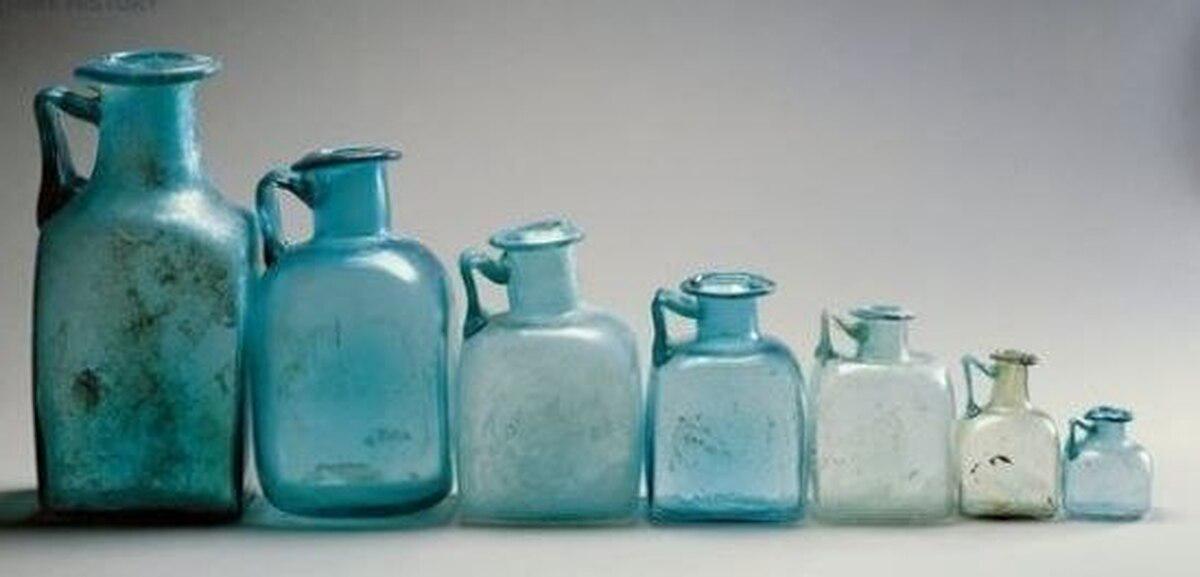
Prior to blowing, glass was created in far slower and labor-intensive ways. The new technology progressed rather quickly into the mold blowing technique used to create these 7 measuring bottles.
Each one having a volume twice more or less then its neighbor depending on the direction you follow them. Measuring vessels like these where usualy stamped with the volume they contained and were used in trade much like weights on a scale were.
From Craft to Technology
The beauty of glassblowing was its simplicity. A skilled artisan could create a drinking cup in minutes, not hours. And unlike carved stone or hammered metal, glass was light, versatile, and could be made in countless shapes. The Romans saw potential not just for artistry but for mass production. They established workshops near ports and cities, turning out bowls, bottles, and flasks by the thousands. For the first time, ordinary people could own something that once only the wealthy had — a clear, gleaming vessel.
Glass on the Move
Rome’s empire was built on movement — of armies, ideas, and above all, trade. Glass fit right in. Lightweight, stackable, and useful, it traveled along the same routes as olive oil, wine, and yes, garum. Archaeologists find Roman glass fragments everywhere from Britain to Syria, proof of how far these objects traveled. A Roman merchant might unload amphorae of fish sauce alongside crates of glassware, both destined for kitchens, taverns, and marketplaces across the Mediterranean world.
Economic Impact
Glass was more than a household item; it became part of Rome’s economic fabric. Workshops provided steady work for artisans and apprentices. Trade in glassware created value at every stage — from sand and soda ash for raw material, to transport by ship, to resale in bustling markets. And like garum, glass became a symbol of Rome’s reach: if you lived under the empire’s banner, chances are you held Roman glass in your hands.
Legacy
Today, glass is so ordinary we barely notice it. Windows, bottles, screens — all descend from that first Roman leap. Just as garum flavored meals for centuries, Roman glass flavored daily life with convenience and beauty. Together, they remind us that Rome’s genius lay not only in conquering lands but in transforming simple crafts into technologies that reshaped the world.
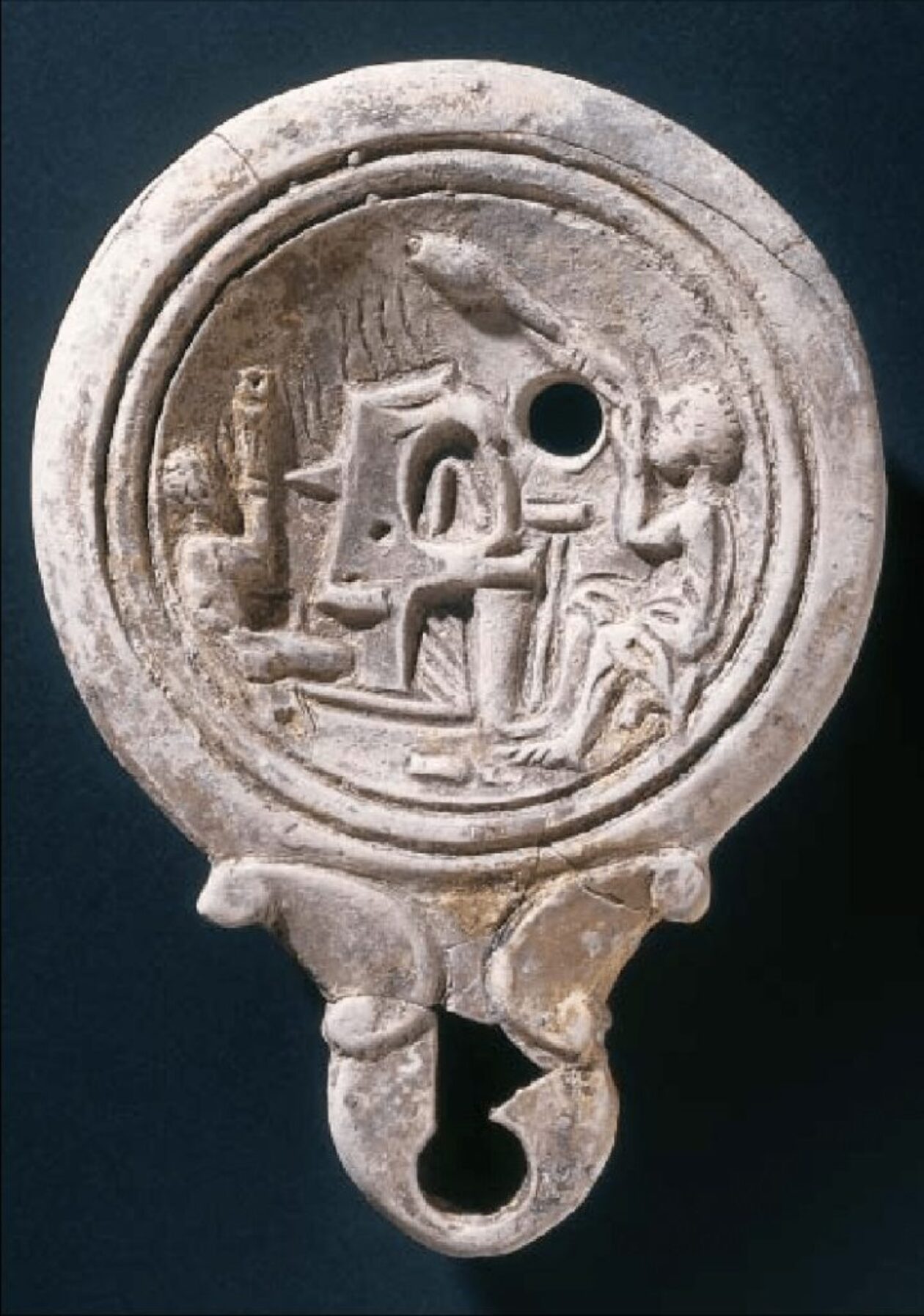
Glass blowing depicted in a Roman oil lamp